Monday, March 18, 2013

The Company Identity


Who is your company?

Simply reading this question for what it is, you might answer, “Engine <blank>”. Looking deeper into the question, you might find there is much more to who exactly your company is.

Your company is a collaboration of talents, personalities, values, strengths, and weaknesses. Your company is similar to your family. You give and take, work together, create lasting relationships, and together fix problems that you encounter. The old statement, “you are only as strong as your weakest link” is very accurate. As a company, it is your responsibility to pick up the weak member and provide assistance, whether it is educational or personal in nature, to ensure that your company continues to grow in proficiency.  Take a minute right now and think about the following questions:

What is your company good at?

What strengths does each member of the company bring to the team?

With the current mindsets of your company members taken into account, what career values does the company share?

Is your company continuing along a path of team building, skill proficiency, and excellence through efficiency?

What changes can the team make to improve the company?

One positive attitude in the company cannot create a good identity, just as one negative attitude cannot create a bad identity. It is the combination of all attitudes in the company that create the identity. Only you can control your personal identity and attitude. Are you contributing positively to the family?

Building pride.

Anyone can verbally state, “I have pride”. Those that have pride, show their pride in their quality of work, their level of knowledge, their application of training concepts, and their work output on the fire ground. Many times, in today’s fire service, pride is influenced by the company officer. If the company officer leads by example, typically the company members will follow based on the positive influence. Unfortunately, the company officer is not the fix all when it comes to pride. If you are still reading this article, you care about this job. 

Remember your first day on the job. Think back to your emotions, the details of the shift, the mistakes you made, and the love for the job that you felt. I bet you are smiling right now if you actually thought back to that day.

Why not feel that excitement everyday? Honestly, who else gets to come to work every shift, have the family atmosphere of the firehouse, help people daily, train on skills daily, and potentially save a person’s life? We have it made. Sure, there are negative aspects to the job, but not allowing the negatives to affect your identity, shows your pride. 

As a company, make decisions together. Not just the tough decisions like “what are we going to eat”, but the decisions of:

How are we going to run the line on a residence fire?
Who is responsible for what on the truck? (Seat assignments)
How should we set the truck up for maximum effectiveness?
What are we going to train on today?

These decisions create buy in and ownership.

Company assignment + Allowing companies to make their own decisions =

satisfied, ready, pride driven, motivated firefighters.

It is simple. Allow the guys to have buy in which creates a positive work environment. Companies will continue to build their level of proficiency, which creates goal driven individuals.

I have heard it all before. You know the “what a whacker” kind of statements that I too am guilty of saying. But, what importance does company merchandise have?

On my leather lid, I have a blue and white number “30” on the back two panels. While to some, that may seem kind of whacker-ish, to me, it means something. Our company colors are white and blue. Our trucks are white with blue lettering and striping and even the interior of our firehouse is white with blue. The simple “30” on my helmet is a symbol of my identity as a member of my company.


I encourage every company to show your pride and dedication by creating a patch or logo. I know of one local firehouse that has a patch for every one of their front line pieces. They are meaningful patches that describe the history of each company and the organization as a whole. The members of that department have a very high level of pride in each company within the organization.

An engine company patch

Creation of company specific merchandise is such a simple task that builds high morale, a level of pride, and ownership. If you are representing your company with a hat that reads “LAD 1 DER” on it, I guarantee that you will think twice before you act outside of your company’s expectations and standards. Take a minute and celebrate your assignment and career by creating identity merchandise. I promise you will see a difference in morale.

The quickest way to build a company identity of prideful ownership is to create a set of standards. The company must together set the bar high. Though it may seem a bit edgy, decide together that your company is going to be the best company in town, you are going to perform better than any other company, you are going to work with the most efficiency on scene and you are going to be the most skilled firefighters on the job. Continue to strive to meet that standard. In 6 months, take a minute to reflect and see how far the company has come. You will be pleasantly surprised.

Company nicknames, motto, and core values.

Company nicknames have a deep-rooted history within the fire service. They typically have a historical reference within them about the territory they serve. This type of company nickname shows ownership of the community that is served.  Ownership of the community by firefighters is quite important. It creates a personal drive that is unlike any other when the tones drop for an emergency in the community.

A company nickname it a firehouse kitchen

Other company nicknames are of an edgy nature that provide a blatant show of company pride. I personally like these types of nicknames. There is nothing wrong with thinking your company is the best around, so long as the team consistently strives to meet the statement given. Openly show identity. It is a part of our fire service history.

Creating a set of core values has a long history in the United States Military. The fire service being Para-military has long ago adopted this tradition and followed suit. The core values of your company make a statement on what the members of your company place as their values, morals, and what the company family places as priorities. A simple example of one company’s core values is “kindness, efficiency, accountability, and proficiency.” Many fire departments have a set of core values. While everyone in the organization goes by the fire department core values, many companies expand with their own set of core values. Company core values sets a standard for its members.

A company motto is a brief statement of intent. The company motto is another aspect of what your company makes decisions based on, how your actions represent the company, and the performance level you wish to obtain on scene and in training. “Always ready” and “Do the right thing” are two examples of positive company mottos.

After creating this foundation for your company, you can start the construction process of building a firehouse culture that always shows your company’s identity.


Company memorabilia.

The history of your company is very important. The history provides a road map of where the company has been and how it has traveled to the current time. Hang up photos of former company members, training sessions, fire calls, former trucks, and past community involvements. Take photos today to add to your cache of memorabilia. It is important for future members to know the pride in which those that have come before them have had in the company. The history shapes the future. Preserve company history and display it openly.
A crew photo from a training drill


A historic sign from the local community on display inside the firehouse

Firehouse or Fire Station?

A house is a home. A station is place that you are assigned to work. I personally do not like the term “Fire Station”. I don’t want to be involved with any company that is inside of a “Fire Station”. I want to be with a company that lives in a “Firehouse.” I want my company’s engine house to be my home away from home, especially since I spend so much time away from home on shift. As a company, hang pictures, display your history, paint the walls, and make it your home. This is one of the best ways to create the family like bond of your company. Create a home together. This is not just a career, but also a life style and culture. Do you want to spend 24 hours in a middle school with bare white block walls, or a house that has photos, decorations, and the warm feeling of home?

A company nickname displayed in the apparatus bay
A company logo mural painted in the living room of a firehouse

Company equipment set up.

If your company has a say so, there is likely a method to how your rig is set up. If there is no method to the madness, you might be a cookie cutter company that lacks thought. There is no way that one truck set up can succeed in every atmosphere and territory.

Succeed = operate with proficiency due to preplanning and forethought.
Get by = managing to get the job done by having to adapt and overcome daily.

I want to address the idea that “every truck should be set up the same.” I understand the methodology behind that idea, such as, any firefighter within the organization can be placed on any truck and know where the tools are located and how the lines are set up. I will even admit that I agreed with that stance at one point; however, I have changed my stance on this over the past few years. I think it is so important for the company to make these decisions. I mean, it IS these guys that are riding the truck and doing the job. Why not choose how they can accomplish their incident objectives best? But what about the guy that floats over from another company? He should be on the engine floor looking through the truck, asking questions, studying the layout, and preparing himself to work on the home company. Who knows, he might even learn something new to share back at his company.
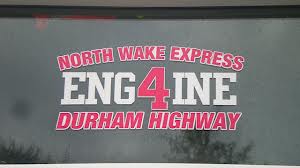
A company nickname on the window of the truck

Think about the level of training the company will get by continuously trying new methods of setting up the truck. In order to set up your company for success, members will have to look at:

What tactical challenges are present in our community?
How can we store our equipment to increase efficiency?
What types of building construction are encountered in our community?

There are so many different methods of doing everything we do out there. All you have to do is look, listen, read, and learn. Who knows, you company might even invent a new method of completing a task that can help others. Share that knowledge and experiment. Do not settle for “the way we have always done that.” By thinking about alternative methods, you build your experience and expand your mind.

What kind of identity do you want to have? The choice is yours. 


Thank you to Captain Erick Mohn of Wake Forest Ladder Company 1, Lieutenant Charlie Laird of Durham Highway Engine Company 1, Engineer Will Patterson of RDU Airport Rescue Company 30, and Jeff Hannum of Tailboard Firefighting of NC for contributing to this article. 

Saturday, March 2, 2013

Driver responsibility. How seriously do you take it?


Driver operator responsibility has been hit on and hit on again. It is pounded into every driver’s head since day one of driver school. Shortly before the New Year I encountered a situation that changed my opinion of this topic for good. Never before have I taken the responsibility of the driver operator so serious.

The truck that I was assigned to drive, a 2009 Pierce, had suffered a hose bed cover failure, which left the cover torn and unable to be repaired. The entire hose bed was exposed. I had some concerns about the situation, some of which I had voiced to officers. I had continued to operate the truck without the hose bed cover, because well… what is the worst that could happen?

It was early in the afternoon on a sunny weekend. My company was called to an unknown outside fire with other units from the town. I was traveling at a moderate rate of speed down a four-lane road. I had just encountered a red light, which I had stopped at before proceeding through the intersection. At the base of a long hill was a bump in the road and a short bridge that crossed a wetland. I was traveling at about 50 mph when I hit the bump. That is when it must have occurred.

The bump caused the front of the 5” supply hose to lift up and the wind was able to get under the hose folds enough to cause the hose to slide. I subsequently lost all 1000’ of my hose. The worst part of the situation was I didn’t have a clue.

We continued down the road responding to the incident with no idea that we had lost the hose.

I check my mirrors periodically and scan from left to right, near and far. I never saw the hose come off.  While enroute to the call the communications center transmitted over our channel that they were receiving calls stating a fire truck had lost a “piece” of hose. On the second report of lost hose transmitted, they stated it was along the stretch of road we had just traveled. I knew it was ours.

We were canceled off the run and found a safe place to park the truck. My firefighter jumped off to see the damage and returned with an awkward smile on his face. I shouted “what?” He quietly stated, it is gone. I replied “what do you mean it’s gone” in a panicked tone. He replied quietly, “it is all gone, all 1000’.” A sick feeling hit me almost instantly. That 3-mile drive back to where we had lost our hose was the longest drive of my career. I couldn’t help but think about if I had damaged someone’s vehicle, hurt someone, or worse, killed someone. I wanted to vomit.

We returned to find that all the hose was laid out along the roadway and citizens were dragging it to the sidewalk. By the grace of God, it had not damaged another vehicle or killed another driver.

What would have been the repercussions if I had caused damage or killed someone?
I would have been responsible, as would our fire department. As the driver, I was responsible for ensuring the safe operation of the truck. I was driving the truck in emergency mode with an unsecured load. I would have been legally and civilly responsible for anything that could have occurred. I could have had to live with hurting or killing someone. Thank goodness that did not occur on this day.

This situation brings to light, how seriously are we taking driver responsibility? Are we allowing people that are under qualified take on this high stress, high responsibility job? Are we responding as fire service leadership to the safety concerns that are voiced?

As a reminder, the driver is responsible for:

Ensuring the truck is ready for response.
Getting the truck to the call safely.
Knowing how to pump the truck (not just a lever puller).
Protecting the crew from traffic.
Operating the truck’s scene lighting.
Knowing where all the tools are located and how to operate those tools.
Returning from the call safely.

How deep does the driver’s responsibility run? Take time to review your job if you drive and think about your actions and the manner in which you are currently doing business. How seriously are you and your organization taking driver responsibility and apparatus safety?

My situation could have happened at any time with the state in which the truck was. Everyone can offer opinions of why it occurred. The bottom line is that it happened and as the driver, it would have been Justin Graney that would sit in the hot seat legally, and Justin Graney that would have had to try to sleep at night if I had hurt someone.

The job of a driver operator holds the highest level of responsibility in the fire service. If you make a mistake, you can seriously injure or kill another person, including your brothers/sisters. Take your job seriously and give 100% to each day on the truck. Have the courage to speak up to your leadership if you feel there anything unsafe occurring. There is not any room for errors in the driver’s job. You need to be on your game.

Fire service leadership must take safety concerns seriously and take rapid steps to rectify the situation before a dangerous situation can occur. In addition, take steps within the organization to require driver operator recurrent training and testing. In our business, we cannot allow complacency or “rusty” skills to be in the forefront. It is your job as the organizational heads to do everything possible to ensure a safe, results based, education rounded fire department.

Stay safe out there. 

Sunday, February 17, 2013

Does this run require an emergency response?


There is nothing sweeter than seeing a shiny red (or black over red…) fire engine with a Q2B siren blaring and red lights blinking. It is a sight to behold.

With the above beautiful image in mind, the age old question of, “what should we run emergency traffic to?” is a more important question now than ever.

In urban areas of our country, traffic is at a much higher density than ever before. This is simply due to a more concentrated population. The higher speed limits, the higher number of interstates, the higher number of multiple lane city streets, and more intersections have created a situation that can be tragic for that shiny fire engine responding to a call.

With the added risks, what types of calls are we running emergency traffic to? If you hit that master warning switch, is it ACTUALLY an emergency?  If you end up in an accident or cause someone else to have an accident due to your response, it is a justified emergency run?

Society has changed. We now live in a society where a lawyer is a phone call away and just because you have given your life to helping others, it doesn’t make you exempt from consequences. Consequences such as civil penalties, criminal charges, company PR nightmares, and career damage. Are you doing what is right? Firefighters must think rather than just acting. Remember, “You only spin because you are unprepared.” It is your job as a driver and officer to use your head. We are professionals remember?

I encourage all organizations to take a minute to state in the form of policy what is an actual emergency. Train on the standard. Teach others to use their heads. We need to stop hitting the master warning switch every time the tones drop. Only a portion of our job is an actual emergency. Some examples of what is not an emergency (remember this is my opinion, but take time to think about my opinion before you just disagree. Also keep in mind; we are educated professionals in the fire service, not fly by night vigilantes.)

Tree down (unless there is a life hazard such as tree on an occupied vehicle etc..)
- Elevator rescues (unless there is a medical emergency inside)
- Many types of service calls.
- Most smoke investigation in the area calls (check out your CAD comments, information from the caller, etc…)

On the flip side of this conversation, don’t allow yourself to become complacent either. If it is dispatched as a high priority call, treat it as such until you prove otherwise. Remember that we deal with worst-case scenarios.

Just do what is right. Take a minute when the buzzer goes off to think about the call. Is it really an emergency? If we run emergency traffic, can we justify it? If the unthinkable occurs, can you justify the run? Can you sleep at night with your decision?

To close, this job is dangerous enough without taking unjustified risks. We will never be able to eliminate the danger of our job entirely. We can however, reduce the level of risk we take by simply taking a minute to assess our decisions before acting.

Be smart out there and respond safely. 

Thursday, February 7, 2013

YOU can be a leader today!


 As a firefighter, are you focused on your own self promotion, or promotion of the company?

That simple question opens the door for many roads to travel down. But as a fire service leader or up and coming leader, have you asked this question to yourself?

What is a fire service leader? The first answer usually out of everyone’s mouth is “officer”. While the answer “officer” is an accepted answer, this is not the only answer or possibly even the best answer. A fire service leader can be any firefighter. Notice that I refrained from using the terms “manager” or “officer”, but chose to use “leader”. The missing link in your company could be you. If you take an "informal leadership" role, your company's potential may sky rocket. 

Lets take it back a step. What is leadership in the fire service?  Think about it.

-The ability to positively influence the company both in the house and on the street?

-The ability to create a positive atmosphere in which company strength can be developed through training?

-The ability to have an influence on others in the company by a show of example?  Doing the right thing always, knowing your job, and knowing your tools.

-The ability to have a personal mindset that places the company success before your own success?

Personal development is very important in this business as is education. The new fire service is quickly moving forward. Continuing education and developing yourself and your mind is critical. Don’t be left behind. However, while engaging in your personal development, share it with others. Encourage your brother/sisters to join you in your personal development. Every firefighter that takes their career, education, fitness, and skills to the next level assists in bringing the company to the next level.

What kinds of behaviors constitute “leadership”?

- Encouraging others to train with you on a topic instead of taking an “easy day”.

- Leading by example: Checking off the truck, checking your airpack, organizing your gear, practicing your skills, maintaining a clean firehouse and truck, and treating each day on the job as the day “the big one” is going to occur.

-Take company pride everyday, no matter how bad of a day it is.
Perseverance is a character trait to be proud of.

-Take an interest in your physical fitness and the company’s physical fitness. Remember, in this job, you rely on the members of your company to help you out in a bad situation. Everyone in the company should be focused on physical fitness for not only their own health, but the safety of your brothers/sisters.

-Go out and get an education. Go back to school for your degree, take an NFA course, work on your certifications, study the territory, read a book on the fire service, or refresh yourself on skills already studied.

-Encourage other members of the company with more experience to share that experience and real world skill craft with others. It doesn’t help the company if only one guy knows how to do that.

“ You don’t work for me. You work with me.”
- Captain Brian Goodwin

The above quote is one that my Captain said to me one night while helping me clean the bathrooms during house work in 2012. I liked the quote because I feel like many fire service officers do not have that style or view on their company. I wrote an article for Tailboard Firefighting of North Carolina in April of 2012 on the topic of management versus leadership. Again touching briefly on that topic, if you an officer are you a manager or a leader? Remember, a manager ensures that his subordinates complete assigned tasks. A leader creates an example, a focus, a team, and mentors others on the team to build the group’s abilities and success level. Are you the fire officer that you imagined yourself being when you rode the back step? Are you a fire officer that firefighters will shape themselves after when they reach promotion? Be honest with yourself. As the officer, developing your men/women for the future and allowing them to think on their own, giving them the tools for success, and letting them excel in their career is your job.

“A football team votes on its Captains to represent them: if your company or department were to vote, would you still be Captain?”
- Firefighter Jeff Hannum

In a society that focuses on “how can I get ahead and look good”, the members of the fire service cannot let that become our focus. Take a look at yourself and make a change if needed. Finally, no one person makes the company or fire service. We don’t have superstars. Share knowledge and ideas. We need to build the company up. If every company builds themselves up, the fire service is taken to the next level.  Be open to changing and love your job everyday. When you think the grass is greener doing something else, picture yourself doing anything else. It might put things back in perspective.

Be safe out there, step up and lead, even if you are not the officer. 

Monday, January 21, 2013

Is it really our job?


This blog posting is one I wrote last summer. In this new year, I think this article should once again surface as it is important to evaluate “what is your job” for the new year. Only after you establish a mind set for success in 2013 will success and progression occur. Make no mistake, if you remain the same from 2012, you will repeat the year prior with no change. Be safe.

Your brother, Justin
____________________________________________________________________________

Is it really our job?

Every house in this country runs calls for service that may or may not have anything significant to them. As firefighters, we often categorize these runs that amount to nothing as, well you know…. But are running these calls that are not kicking in doors and fighting fire or doing CPR after cutting someone out of a car, our job? We as firefighters need to take a long look in the mirror and decide, what is our job?

Scenario: It is nearing the end of your tour of duty and the phone rings. The citizen on the other end sounds to be in a slight panic and explains that her dog is stuck in a drainage pipe at the end of her driveway.

With the given scenario, what would you do? I am sure some of you would say, “call animal control,” or “call me when he catches on fire”. This is a common response I heard when giving the scenario to some of the guys around the kitchen table. Granted we were all joking around, but for those of you that “get it”, you may have a different response when you seriously think it over.

As a firefighter, you signed on to save lives. Never in any oath, promotional ceremony, or job description have I ever seen where we save “human” lives. I have only seen “save lives.” When the dog from the scenario entered the drainage pipe, he was living, thus it is a life. To many and possibly even you, a family dog is just that, family. Granted, I would inject some caution with the situation at hand for safety’s sake, but our job is to get in there, figure it out, make the rescue, and go home. Our job is to save lives.

Our main job, despite what anyone says is to fight fires and save lives. We run the Haz-Mats, the EMS runs, the auto accidents, and the service calls. All of these things have 1 major thing in common. They are all jobs we do to serve. We are here to serve. This job is a privilege that your community allows you to maintain. Thank them by giving it your all and being a community steward.

Any job that the fire department can do to better the lives of the community served, should be looked into and if feasible, implemented. For example:

Hazardous Materials response
Emergency Medical Services
Fire Prevention and Public Education
Community service opportunities for the court system
Food drive support
Elderly support networks

The dog in a drainage pipe scenario is just one that I have encountered in my career. There are many other examples of these types of calls, you know the 2am smoke detector chirping or the leg pain that has an onset of a year ago and they call at 4 am. We all have ran them, we all have moaned and groaned, and we all should suck it up. This is our job.

Take these calls as an opportunity to sharpen your skills, practice, drill, and most importantly, reach out to the community you protect. For example, Ladder Company 1 in Wake Forest will take the time to ladder a building and set the aerial up on occasion, on scene of the normal automatic fire alarm to maintain skills and train. I know that Captain Chris Wilson of the City of Raleigh Fire Department will from time to time call on his guys to stretch lines on an automatic fire alarm where nothing is going on. Do these situations scream overkill? Absolutely not. Every call should be treated like it is the “big one”. Every call should be an opportunity for the crew to train. At the end of the day, these proactive companies are ready because of their progressive attitudes.

You may have noticed above that I hit on “elderly support networks.” This is an important opportunity for the fire department. A few years ago, the former Falls Fire Department that I was blessed to have been apart of, started a program called, “Operation Care Bear”. The program was started by firefighters who saw that there was a need to provide a life saving prevention service to the elderly of their community during adverse weather. Local citizens and churches could have residents placed on the “care bear” list. Anytime that certain weather parameters were met, firefighters would hit the streets and visit the citizens on the list. Firefighters would take the time to visit with the citizens, ensure that their medication and food supply was adequate to safely face the adverse weather condition as well as ensuring that the citizen had adequate heating or cooling of their home. Firefighters would also look around the home for any hazards to the citizen, help to fix the hazards, and would help with anything around the house that the citizen couldn’t get accomplished. If the firefighters could not make it right. They called someone who could. Visits would last around 15 minutes and the impact of these visits may never be known, which is fine by me. I know that a positive impact was made on these citizens that we treated like we would our own family. Through this program, firefighters knew their community, rallied support, and created a community bond. In March of 2012, Falls Fire Department merged with Wake Forest Fire Department. The program has continued for the citizens of the Falls community with outstanding leadership of the program. The program has met some “this isn’t our job” controversy since it’s development. So is this type of service our job? You decide. Did this program potentially save lives? Did this program allow firefighters to serve their community? Did this program allow for the strengthening of the community?

So I ask you again, what is and isn’t our job? Make a change in 2013 for the better of not only yourselves, but your community.

For more information on Falls’ Operation Care Bear Service, shoot me an email at graney@tailboardfirefighting.com and I will put you in touch with the program coordinator. This program is near and dear to me as I have family on the care bear list. This program makes a difference. Could your department use this? I hope to see this program form into an elderly care program for firefighters nationwide.


Monday, January 7, 2013

The importance of a well written incident report


Composing an incident report is most likely your least favorite part of running calls. I know it is for me. Even though this is not a favorite part of the job for firefighters, it is important that you give it your all. I have been to court two times in my career, both of which I was a nervous wreck. I was very luck that in both cases, the case was settled with some interviews with lawyers and prosecutors, which kept me from having to take the witness stand. Had I taken the stand, I may have been made to look like a fool since my report documentation was not anything to be proud of.

Every report that you compose must tell the whole story. You need to write what would almost be called a story. You need to document everything you can think of from each incident. If you use an incident reporting software, make sure you fill in as many fields as possible. You want to ensure that when you are called to court in two years, you can refresh yourself and have information to assist you, as you likely will have forgotten much of the incident details.

- Avoid making statements that as a firefighter you cannot determine:

Statements such as the patient was “drunk” or diagnosing a medical condition is not wise. Unless you carry a breath test device in your med bag, and you are trained to administer those tests, you cannot determine without a shadow of a doubt that the patient was intoxicated, even if common sense would tell you different. Doctors diagnose medical conditions. As EMTs, Paramedics, First Responders, etc.… we treat symptoms. You may know exactly the problem that a patient is encountering, but in a court, we are not in the business of making a diagnosis.

- Avoid making statements about what others did on scene, unless it directly pertains to the decisions and tactics you and your company employed:

Your incident report is about what your company did on scene. Each company, police unit, EMS unit, etc.… has to do their report. Unless the actions of another unit affected an action your company made, limit its entry into your report.

- Stick to the facts, no matter how small they seem right now:

Include what you and your company did, what you and your company members saw, and give the details of those areas. Something that may seem like a small item now, may be something huge if you end up in a courtroom. No information is too small to include.

- Ensure your grammar and spelling is correct and that the content is educated and easy for anyone to interpret:

Misspellings and grammatical errors can hurt your credibility in a courtroom. Steer clear of using fire service slang terminology

For example:

Firefighter Donny grabbed the can and hit the fire.

A better way of wording that in a report would be:

Firefighter Donny used a water extinguisher and extinguished the fire.

Avoid using codes and stick to plain text when composing your report.

- Enter reports in a timely manner:

You may run several incidents in a tour of duty. Take the time to enter your reports in a timely manner. It doesn’t take long for call specifics to mesh together over the course of running several calls. If at all possible, enter them as quickly as possible when you return to the firehouse to ensure their validity and accuracy.

Incident reporting is very important. Take the time to ensure your report is the best it can be. If you are a company officer, include your crew in the reporting process. They might have some vital information that you need to include in the report. After some time goes by, your well-written incident report may be all you have to guide you when something comes up about the call. 

Tuesday, January 1, 2013

Why not make a CHANGE?


To start off 2013, I figured discussing the dreaded “change” battle in the firehouse would be appropriate. In my last blog entry, I challenged everyone to do a firefighter reflection for 2012. If you took the time to meet the challenge, you likely identified several areas that you will be “changing” or “upgrading”. Change is not a bad thing, but often as firefighters, we fear change and the unknown that surrounds it. Why?

Changing just for the sake of change is foolish. Change should only occur in the firehouse if it is for the purpose of improving the company, the service provided, or improving firefighters. You can try to get buy in from everyone in the company, but more times than not, you will have 1-3 people that will fight it, no matter how smart the change is.

So why is change fought so tough?

1. “I do not like ideas I did not come up with.”
I also call this “manager syndrome”. Managers like to have full control typically. They focus their time on “managing” others and delegating work. When it comes to decision-making or suggestions of change, these “managers” will often become offended, argumentative, and withdrawn, as they do not like “subordinates” thinking. It threatens them and their position, and shakes their psyche to think that someone else is potentially receiving credit and able to think without them telling you what to think. The opposite of the “manager syndrome” is a leader. A leader promotes new ideas and concepts and promotes using your head in the firehouse. A leader will allow his guys to think on their own and explore new ideas and concepts.

2. “We have always done it this way. Why change it if it is not broken?”
This statement screams, “I hate change.” Making a change in an area of the way we do business does not mean that the old way was “broken”. It simply means that you are progressive in the job, and intelligent enough to seek improved methods to the job. If you are a firefighter that “Gets It”, you constantly seek ways to improve your craft and the craft of the company. You don’t forget your old way of doing it; you just put it in the toolbox as plan B. If the new plan doesn’t work out, pull out plan B. If you don’t have a plan B, you don’t “Get It”.

3. “I don’t like the guy that came up with this, so I am not giving it a chance.”
Are you serious? Since when did we become a high school with cliques shaping how we make decisions? I don’t care if I cannot stand “Firefighter A”, we have a job to do and anything that relates to the job, our performance, and ultimately our survival will require me to work with “Firefighter A.”  Get it or get out.

4. “I will have to learn something new if we change that.”
If you fall into this category, you need to take a long look in the mirror and decide if this is the job for you. Training and sharpening of concepts is continuous.

5. “This is not <Insert any other fire department name here>.”
Have you ever thought that maybe someone else has thought of something that works a little better? Networking has become huge in social media. Why are we not networking our ideas throughout the country?  Your company might have figured out a method that will help a company on the other side of the country.

After over 10 years in the service, these are the top 5 reasons and mentalities that I have seen that cause resistance to change. All of these 5 have one thing in common……….fear.

The main reason for a resistance to change is FEAR. FEAR that someone will look better than you, FEAR you will have to train on something new, FEAR that you will look stupid, FEAR that giving into this change will create a situation where more change will occur, and FEAR that someone else is right.

“Fear can be more crippling than any physically debilitating disease”
–Dr.Richard Gasaway

So what do we do to combat the anti-change movement? 

We stand our ground and continue to do what is right. If you are a firefighter that “Gets It”, you will continue to ignore these mutts, stand your ground when you propose new concepts and ideas, and do not let these people dampen your drive to progress in the job.  Always promote the company before yourself.

Stay safe out there; train hard, and Happy New Year. Shoot me an email and let me know what changes you want to make this year at your company. I am interested to hear it.  Email me at graney@tailboardfirefighting.com


Dr.Richard Gasaway who is quoted in this article is with Situational Awareness Matters. Check out his website at www.samatters.com. He is a pretty smart guy with a good message.

Some social media connections to make for 2013:
Follow me on twitter: @justingraney
Connect with me on LinkedIn: Justin Graney
Follow Tailboard on twitter: @tailboardfd
Like Tailboard on Facebook: www.facebook.com/tailboardfirefighting