Friday, June 28, 2013

Turnouts are for EVERYONE


I am fortunate enough to have been enjoying a week at the beach. The weather has been great and the fishing has been wonderful. It has been a needed time to recharge the system. I even had my best friend say she would marry me on this trip. It has been a great week. It is always at the time you least expect it that an event will occur, creating an inspiration for a new post.

Today, I was relaxing in the beach house when my fiancĂ© called to say that something was on fire a street over from our house. Naturally, I went to investigate. I found commercial dumpster against a home under construction with structural building materials burning within. Luckily, the beach winds were headed away from the home, or there would have likely been an exposure issue. The local fire department arrived and pulled a 1.5” trash line. Line deployment went well. A volunteer arrived and fought the fire in boat shoes, shorts, and a tee shirt. That’s when the writing bug bit me. With all off the cancer causing chemicals such as hydrogen cyanide in today’s building materials, glues, and by-products, why do we continue to expose ourselves unnecessarily to these health dangers?

There is a simple solution.  TURNOUTS ARE FOR EVERYONE. Wear your turnouts. Wear your air pack. We are firefighters. Firefighters wear their gear. 

Firefighters are smart people. Use the tools available to protect yourselves. If you are pumping the truck, at least put your pants and coat on and be ready to assist if needed if you don’t have the manpower to support the mission. Chief Officers arriving on the car; you expect your guys to wear their gear, where is yours? Lead by example. Even though you are a Chief, you are STILL a firefighter first and foremost. 

In a world of social media, camera phones, and the rapid transfer and receipt of information, public perception in the fire service is paramount. It affects the ability to obtain funding, the ability to secure public confidence and the building of community support. What is the perception you present to the community when you don’t don your gear to fight a fire? Joe citizen may even ask, “why do we even use tax dollars to pay for that gear if they don’t even use it.” Remember public perception in everything you do as an organization. Are you giving the community the performance that you want them to remember or it is the dress rehearsal that wasn’t supposed to be released yet?

Am I guilty of lacking the turnouts department?  Yes. When I came up in the fire service less gear was better. I heard the phrase “man up” from time to time. With the changing fire service, organizations I belong to created a culture that took pride in wearing our gear. One may even say that we “over” wear our gear. I just love to wear my gear. 

In closing, be smart with your choice of PPE. Your health depends on it. Don’t take unnecessary risks. We have the tools to deal with it. Use them wisely. We all want to go home to our families. Represent your organization by projecting an image of professionalism.

Be safe, smart, and treat every day as game day. 

Sunday, May 26, 2013

What is it that we actually do?


What does the fire department do? If you ask Joe Citizen walking down the street he will reply, “they put out fires”. Yes, our original purpose and still our number 3 job is to fight fires. Years ago, I was one of the guys that moaned and groaned about running a medical call. I have even let the words “I am a fireman, not a medic” slip from my lips from time to time.
As my career has progressed over the years, I see the bigger picture now. Fire Department stands for much more than the organization that responds to fight fires. The new definition of Fire Department is the organization that assists anyone in need and does any job it can to save a life. As firefighters we continue to take on tasks to deepen our level of service. We run the medical calls, we handle the haz-mats, we handle the rescue calls, we cut cars, we do wellness checks, and even tackle a fire from time to time. Why do we dabble in so many roles? It is all for the top two purposes.

When I have been at other fire departments teaching, I always like to ask people why they became a firefighter. The number 1 response I get is “to help people”. If that is true, why do we complain about having to run the “non-fire” calls? I am guilty of it too.
This week I encountered a career altering event that reinforced my understanding of what it is that we actually do. In June of 2012, we were called out for a breathing problem on board an aircraft. When the first two fireman arrived on scene, they found a patient in cardiac arrest. I responded over to assist and worked with EMS for about an hour to save this man. We rotated through round after round of CPR and defibrillated the patient at least 3 times. He survived.

This past week my company was invited to attend the Wake County NC, Cardiac Arrest Resuscitation Ceremony in downtown Raleigh NC. My past Captain and I went to the event. I was a bit uneasy about going to an awards ceremony as I feel that I get paid to do this work. I am happy that the outcome was good, but I didn’t feel right about being rewarded for doing my job. We were awarded a certificate and citation pin and returned to our seats. At the end of the ceremony, the medical director of Wake County, Dr.Brent Meyers, asked if any survivors wished to address the audience. The first man to take Dr.Meyers up on the offer was the man we had saved. Prior to his address of the audience, I had no clue he would be attending. He spoke about our company’s quick actions and how he has resumed a full life following his event. I began to feel something that I had yet to feel in my career. I am not sure that I can put it into words.
Following the ceremony, my past Captain and I went and spoke with the man and his wife. He looked me in the eyes, shook my hand, and with tears rolling down his cheeks, said, “thank you”. It was quite an emotional moment. The man told me how his wife has been sick with cancer and because he is alive, he is able to care for her. We exchanged information and decided that we would keep in touch.

Following this evening, I sat and thought long and hard about what it is I do as a fireman. When people have asked me what I do for a living, I would proudly tell them, “I fight fires.” Firefighters fight fires. But our top two purposes are saving lives, and helping others. Now when people ask me what I do for a living, I will still proudly tell them that I am a fireman, but I don’t simply fight fires. I help others, no matter what is asked of my company and not just at fires.

Take a minute to ask yourself what it is you do in the fire department. Look at the big picture. Over the past 10 years, the definition of fire department has changed. What is your company’s definition of what you are and do? Take time as a company to create a vision of where it is you want to be, what you want to accomplish, and what level of service you want to provide to your citizens. The sky is the limit. That is what I love so much about this job. The ability to get involved in anything that will help others.

So what is it that we actually do? We make our community a better place to live.

On a final side note, Wake County Fire Departments and EMS successfully resuscitated 95 people in 2012 from cardiac arrest. These people walked out of the hospital and were neurologically intact. This is up from 76 people saved in 2011. This is a statistic I am proud of as a Wake County Fireman. 

Stay safe and serve to save.

Monday, March 18, 2013

The Company Identity


Who is your company?

Simply reading this question for what it is, you might answer, “Engine <blank>”. Looking deeper into the question, you might find there is much more to who exactly your company is.

Your company is a collaboration of talents, personalities, values, strengths, and weaknesses. Your company is similar to your family. You give and take, work together, create lasting relationships, and together fix problems that you encounter. The old statement, “you are only as strong as your weakest link” is very accurate. As a company, it is your responsibility to pick up the weak member and provide assistance, whether it is educational or personal in nature, to ensure that your company continues to grow in proficiency.  Take a minute right now and think about the following questions:

What is your company good at?

What strengths does each member of the company bring to the team?

With the current mindsets of your company members taken into account, what career values does the company share?

Is your company continuing along a path of team building, skill proficiency, and excellence through efficiency?

What changes can the team make to improve the company?

One positive attitude in the company cannot create a good identity, just as one negative attitude cannot create a bad identity. It is the combination of all attitudes in the company that create the identity. Only you can control your personal identity and attitude. Are you contributing positively to the family?

Building pride.

Anyone can verbally state, “I have pride”. Those that have pride, show their pride in their quality of work, their level of knowledge, their application of training concepts, and their work output on the fire ground. Many times, in today’s fire service, pride is influenced by the company officer. If the company officer leads by example, typically the company members will follow based on the positive influence. Unfortunately, the company officer is not the fix all when it comes to pride. If you are still reading this article, you care about this job. 

Remember your first day on the job. Think back to your emotions, the details of the shift, the mistakes you made, and the love for the job that you felt. I bet you are smiling right now if you actually thought back to that day.

Why not feel that excitement everyday? Honestly, who else gets to come to work every shift, have the family atmosphere of the firehouse, help people daily, train on skills daily, and potentially save a person’s life? We have it made. Sure, there are negative aspects to the job, but not allowing the negatives to affect your identity, shows your pride. 

As a company, make decisions together. Not just the tough decisions like “what are we going to eat”, but the decisions of:

How are we going to run the line on a residence fire?
Who is responsible for what on the truck? (Seat assignments)
How should we set the truck up for maximum effectiveness?
What are we going to train on today?

These decisions create buy in and ownership.

Company assignment + Allowing companies to make their own decisions =

satisfied, ready, pride driven, motivated firefighters.

It is simple. Allow the guys to have buy in which creates a positive work environment. Companies will continue to build their level of proficiency, which creates goal driven individuals.

I have heard it all before. You know the “what a whacker” kind of statements that I too am guilty of saying. But, what importance does company merchandise have?

On my leather lid, I have a blue and white number “30” on the back two panels. While to some, that may seem kind of whacker-ish, to me, it means something. Our company colors are white and blue. Our trucks are white with blue lettering and striping and even the interior of our firehouse is white with blue. The simple “30” on my helmet is a symbol of my identity as a member of my company.


I encourage every company to show your pride and dedication by creating a patch or logo. I know of one local firehouse that has a patch for every one of their front line pieces. They are meaningful patches that describe the history of each company and the organization as a whole. The members of that department have a very high level of pride in each company within the organization.

An engine company patch

Creation of company specific merchandise is such a simple task that builds high morale, a level of pride, and ownership. If you are representing your company with a hat that reads “LAD 1 DER” on it, I guarantee that you will think twice before you act outside of your company’s expectations and standards. Take a minute and celebrate your assignment and career by creating identity merchandise. I promise you will see a difference in morale.

The quickest way to build a company identity of prideful ownership is to create a set of standards. The company must together set the bar high. Though it may seem a bit edgy, decide together that your company is going to be the best company in town, you are going to perform better than any other company, you are going to work with the most efficiency on scene and you are going to be the most skilled firefighters on the job. Continue to strive to meet that standard. In 6 months, take a minute to reflect and see how far the company has come. You will be pleasantly surprised.

Company nicknames, motto, and core values.

Company nicknames have a deep-rooted history within the fire service. They typically have a historical reference within them about the territory they serve. This type of company nickname shows ownership of the community that is served.  Ownership of the community by firefighters is quite important. It creates a personal drive that is unlike any other when the tones drop for an emergency in the community.

A company nickname it a firehouse kitchen

Other company nicknames are of an edgy nature that provide a blatant show of company pride. I personally like these types of nicknames. There is nothing wrong with thinking your company is the best around, so long as the team consistently strives to meet the statement given. Openly show identity. It is a part of our fire service history.

Creating a set of core values has a long history in the United States Military. The fire service being Para-military has long ago adopted this tradition and followed suit. The core values of your company make a statement on what the members of your company place as their values, morals, and what the company family places as priorities. A simple example of one company’s core values is “kindness, efficiency, accountability, and proficiency.” Many fire departments have a set of core values. While everyone in the organization goes by the fire department core values, many companies expand with their own set of core values. Company core values sets a standard for its members.

A company motto is a brief statement of intent. The company motto is another aspect of what your company makes decisions based on, how your actions represent the company, and the performance level you wish to obtain on scene and in training. “Always ready” and “Do the right thing” are two examples of positive company mottos.

After creating this foundation for your company, you can start the construction process of building a firehouse culture that always shows your company’s identity.


Company memorabilia.

The history of your company is very important. The history provides a road map of where the company has been and how it has traveled to the current time. Hang up photos of former company members, training sessions, fire calls, former trucks, and past community involvements. Take photos today to add to your cache of memorabilia. It is important for future members to know the pride in which those that have come before them have had in the company. The history shapes the future. Preserve company history and display it openly.
A crew photo from a training drill


A historic sign from the local community on display inside the firehouse

Firehouse or Fire Station?

A house is a home. A station is place that you are assigned to work. I personally do not like the term “Fire Station”. I don’t want to be involved with any company that is inside of a “Fire Station”. I want to be with a company that lives in a “Firehouse.” I want my company’s engine house to be my home away from home, especially since I spend so much time away from home on shift. As a company, hang pictures, display your history, paint the walls, and make it your home. This is one of the best ways to create the family like bond of your company. Create a home together. This is not just a career, but also a life style and culture. Do you want to spend 24 hours in a middle school with bare white block walls, or a house that has photos, decorations, and the warm feeling of home?

A company nickname displayed in the apparatus bay
A company logo mural painted in the living room of a firehouse

Company equipment set up.

If your company has a say so, there is likely a method to how your rig is set up. If there is no method to the madness, you might be a cookie cutter company that lacks thought. There is no way that one truck set up can succeed in every atmosphere and territory.

Succeed = operate with proficiency due to preplanning and forethought.
Get by = managing to get the job done by having to adapt and overcome daily.

I want to address the idea that “every truck should be set up the same.” I understand the methodology behind that idea, such as, any firefighter within the organization can be placed on any truck and know where the tools are located and how the lines are set up. I will even admit that I agreed with that stance at one point; however, I have changed my stance on this over the past few years. I think it is so important for the company to make these decisions. I mean, it IS these guys that are riding the truck and doing the job. Why not choose how they can accomplish their incident objectives best? But what about the guy that floats over from another company? He should be on the engine floor looking through the truck, asking questions, studying the layout, and preparing himself to work on the home company. Who knows, he might even learn something new to share back at his company.
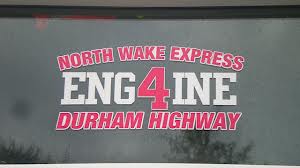
A company nickname on the window of the truck

Think about the level of training the company will get by continuously trying new methods of setting up the truck. In order to set up your company for success, members will have to look at:

What tactical challenges are present in our community?
How can we store our equipment to increase efficiency?
What types of building construction are encountered in our community?

There are so many different methods of doing everything we do out there. All you have to do is look, listen, read, and learn. Who knows, you company might even invent a new method of completing a task that can help others. Share that knowledge and experiment. Do not settle for “the way we have always done that.” By thinking about alternative methods, you build your experience and expand your mind.

What kind of identity do you want to have? The choice is yours. 


Thank you to Captain Erick Mohn of Wake Forest Ladder Company 1, Lieutenant Charlie Laird of Durham Highway Engine Company 1, Engineer Will Patterson of RDU Airport Rescue Company 30, and Jeff Hannum of Tailboard Firefighting of NC for contributing to this article. 

Saturday, March 2, 2013

Driver responsibility. How seriously do you take it?


Driver operator responsibility has been hit on and hit on again. It is pounded into every driver’s head since day one of driver school. Shortly before the New Year I encountered a situation that changed my opinion of this topic for good. Never before have I taken the responsibility of the driver operator so serious.

The truck that I was assigned to drive, a 2009 Pierce, had suffered a hose bed cover failure, which left the cover torn and unable to be repaired. The entire hose bed was exposed. I had some concerns about the situation, some of which I had voiced to officers. I had continued to operate the truck without the hose bed cover, because well… what is the worst that could happen?

It was early in the afternoon on a sunny weekend. My company was called to an unknown outside fire with other units from the town. I was traveling at a moderate rate of speed down a four-lane road. I had just encountered a red light, which I had stopped at before proceeding through the intersection. At the base of a long hill was a bump in the road and a short bridge that crossed a wetland. I was traveling at about 50 mph when I hit the bump. That is when it must have occurred.

The bump caused the front of the 5” supply hose to lift up and the wind was able to get under the hose folds enough to cause the hose to slide. I subsequently lost all 1000’ of my hose. The worst part of the situation was I didn’t have a clue.

We continued down the road responding to the incident with no idea that we had lost the hose.

I check my mirrors periodically and scan from left to right, near and far. I never saw the hose come off.  While enroute to the call the communications center transmitted over our channel that they were receiving calls stating a fire truck had lost a “piece” of hose. On the second report of lost hose transmitted, they stated it was along the stretch of road we had just traveled. I knew it was ours.

We were canceled off the run and found a safe place to park the truck. My firefighter jumped off to see the damage and returned with an awkward smile on his face. I shouted “what?” He quietly stated, it is gone. I replied “what do you mean it’s gone” in a panicked tone. He replied quietly, “it is all gone, all 1000’.” A sick feeling hit me almost instantly. That 3-mile drive back to where we had lost our hose was the longest drive of my career. I couldn’t help but think about if I had damaged someone’s vehicle, hurt someone, or worse, killed someone. I wanted to vomit.

We returned to find that all the hose was laid out along the roadway and citizens were dragging it to the sidewalk. By the grace of God, it had not damaged another vehicle or killed another driver.

What would have been the repercussions if I had caused damage or killed someone?
I would have been responsible, as would our fire department. As the driver, I was responsible for ensuring the safe operation of the truck. I was driving the truck in emergency mode with an unsecured load. I would have been legally and civilly responsible for anything that could have occurred. I could have had to live with hurting or killing someone. Thank goodness that did not occur on this day.

This situation brings to light, how seriously are we taking driver responsibility? Are we allowing people that are under qualified take on this high stress, high responsibility job? Are we responding as fire service leadership to the safety concerns that are voiced?

As a reminder, the driver is responsible for:

Ensuring the truck is ready for response.
Getting the truck to the call safely.
Knowing how to pump the truck (not just a lever puller).
Protecting the crew from traffic.
Operating the truck’s scene lighting.
Knowing where all the tools are located and how to operate those tools.
Returning from the call safely.

How deep does the driver’s responsibility run? Take time to review your job if you drive and think about your actions and the manner in which you are currently doing business. How seriously are you and your organization taking driver responsibility and apparatus safety?

My situation could have happened at any time with the state in which the truck was. Everyone can offer opinions of why it occurred. The bottom line is that it happened and as the driver, it would have been Justin Graney that would sit in the hot seat legally, and Justin Graney that would have had to try to sleep at night if I had hurt someone.

The job of a driver operator holds the highest level of responsibility in the fire service. If you make a mistake, you can seriously injure or kill another person, including your brothers/sisters. Take your job seriously and give 100% to each day on the truck. Have the courage to speak up to your leadership if you feel there anything unsafe occurring. There is not any room for errors in the driver’s job. You need to be on your game.

Fire service leadership must take safety concerns seriously and take rapid steps to rectify the situation before a dangerous situation can occur. In addition, take steps within the organization to require driver operator recurrent training and testing. In our business, we cannot allow complacency or “rusty” skills to be in the forefront. It is your job as the organizational heads to do everything possible to ensure a safe, results based, education rounded fire department.

Stay safe out there. 

Sunday, February 17, 2013

Does this run require an emergency response?


There is nothing sweeter than seeing a shiny red (or black over red…) fire engine with a Q2B siren blaring and red lights blinking. It is a sight to behold.

With the above beautiful image in mind, the age old question of, “what should we run emergency traffic to?” is a more important question now than ever.

In urban areas of our country, traffic is at a much higher density than ever before. This is simply due to a more concentrated population. The higher speed limits, the higher number of interstates, the higher number of multiple lane city streets, and more intersections have created a situation that can be tragic for that shiny fire engine responding to a call.

With the added risks, what types of calls are we running emergency traffic to? If you hit that master warning switch, is it ACTUALLY an emergency?  If you end up in an accident or cause someone else to have an accident due to your response, it is a justified emergency run?

Society has changed. We now live in a society where a lawyer is a phone call away and just because you have given your life to helping others, it doesn’t make you exempt from consequences. Consequences such as civil penalties, criminal charges, company PR nightmares, and career damage. Are you doing what is right? Firefighters must think rather than just acting. Remember, “You only spin because you are unprepared.” It is your job as a driver and officer to use your head. We are professionals remember?

I encourage all organizations to take a minute to state in the form of policy what is an actual emergency. Train on the standard. Teach others to use their heads. We need to stop hitting the master warning switch every time the tones drop. Only a portion of our job is an actual emergency. Some examples of what is not an emergency (remember this is my opinion, but take time to think about my opinion before you just disagree. Also keep in mind; we are educated professionals in the fire service, not fly by night vigilantes.)

Tree down (unless there is a life hazard such as tree on an occupied vehicle etc..)
- Elevator rescues (unless there is a medical emergency inside)
- Many types of service calls.
- Most smoke investigation in the area calls (check out your CAD comments, information from the caller, etc…)

On the flip side of this conversation, don’t allow yourself to become complacent either. If it is dispatched as a high priority call, treat it as such until you prove otherwise. Remember that we deal with worst-case scenarios.

Just do what is right. Take a minute when the buzzer goes off to think about the call. Is it really an emergency? If we run emergency traffic, can we justify it? If the unthinkable occurs, can you justify the run? Can you sleep at night with your decision?

To close, this job is dangerous enough without taking unjustified risks. We will never be able to eliminate the danger of our job entirely. We can however, reduce the level of risk we take by simply taking a minute to assess our decisions before acting.

Be smart out there and respond safely.